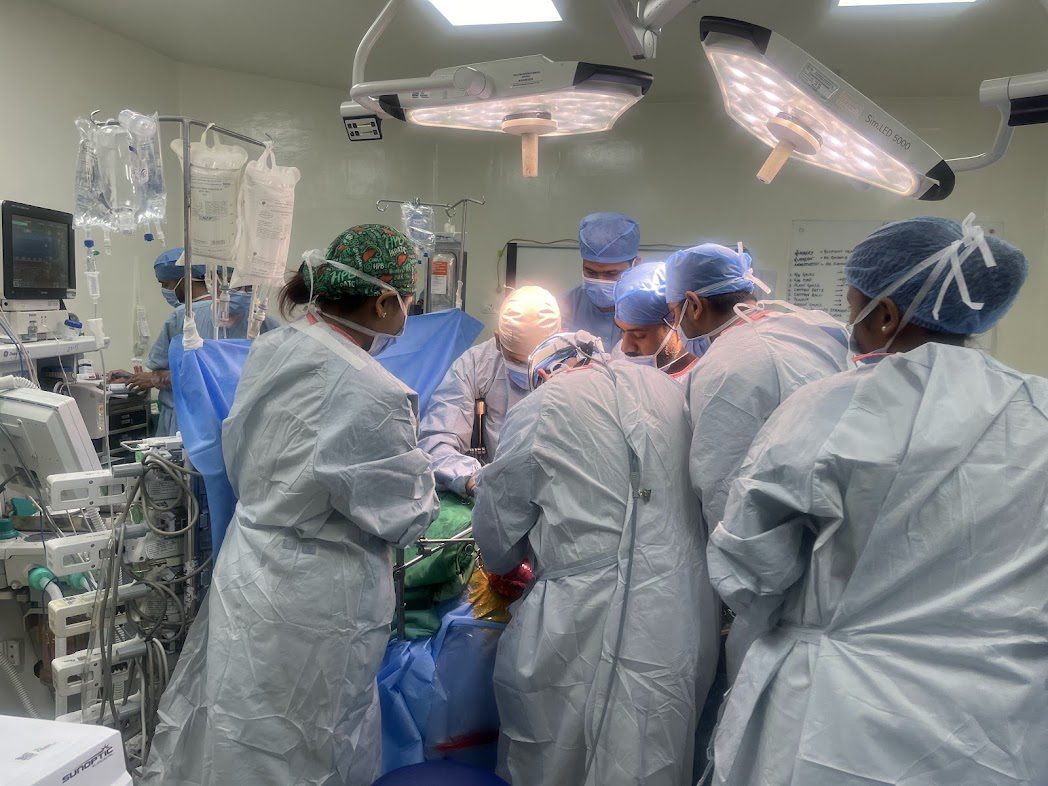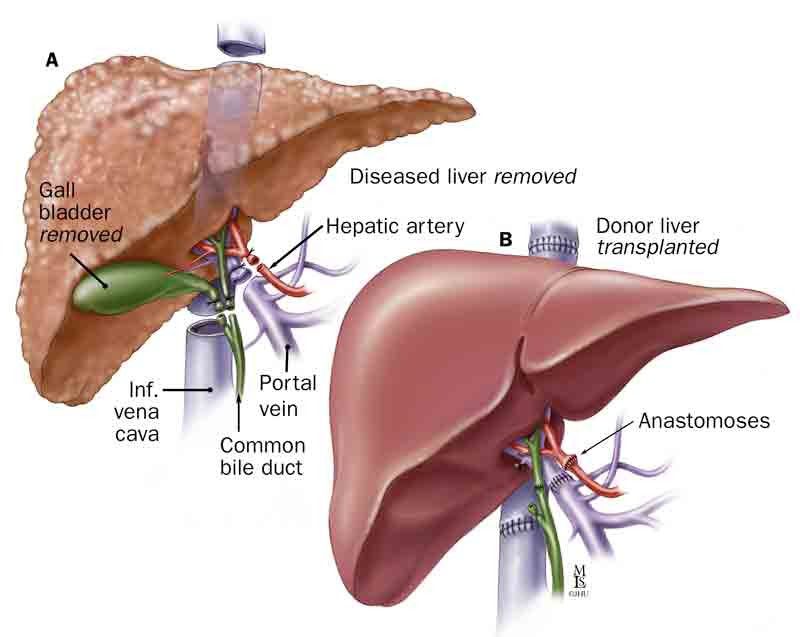
A liver transplant is a surgical procedure where a diseased or failing liver is removed and replaced with a healthy liver from another person, called a donor. This surgery is usually done when someone’s liver is so badly damaged that it can no longer work properly, often due to conditions like cirrhosis, liver cancer, or acute liver failure.

The new liver can come from:

A deceased donor

Someone who has recently died and donated their organs

A living donor

A healthy person who donates part of their liver, which can regrow over time

Main steps in a liver transplant process

Step 1

Evaluation

The patient undergoes tests and assessments to see if they are healthy enough for surgery and truly need a transplant.

Step 2

Getting on the Waiting List

If approved, the patient is put on a state waiting list.

Step 3

Finding a Donor

When a matching donor liver becomes available (either from a deceased or living donor), the transplant team is notified.

Step 4

The Surgery

Surgeons remove the damaged liver and replace it with the healthy donor liver. The surgery can take several hours.

Step 5

Recovery and Monitoring

After surgery, the patient spends time in the ICU and hospital to recover. They'll be closely monitored for signs of rejection or complications.

Step 6

Long-Term Care

Patients take medicines (immunosuppressants) for life to prevent the body from rejecting the new liver. Regular checkups are also needed.

Types of Immunosuppressive medicines

There are several types of immunosuppressive drugs that are used after liver transplantation to prevent the immune system from rejecting the new liver. These include:

Calcineurin inhibitors (CNI)

Tacrolimus and cyclosporine are the most commonly used CNIs after liver transplantation. They work by inhibiting the activity of calcineurin, a protein involved in the immune response.

Antiproliferative agents

Azathioprine and mycophenolate mofetil (MMF) are examples of antiproliferative agents. They work by inhibiting the proliferation of immune cells, which helps to prevent the rejection of the transplant.

mTOR inhibitors

Sirolimus and everolimus are examples of mTOR inhibitors. They work by inhibiting the activity of mTOR, a protein that plays a role in cell growth and survival.

Corticosteroids

Prednisolone is usually prescribed in gradually descreasing doses for the first few months after a liver transplant

It is important to monitor patients taking immunosuppressant drugs after liver transplantation to ensure that they are not experiencing any side effects and that the drugs are effectively preventing rejection. This typically includes regular blood tests to check the levels of the drugs in the patient’s system and to monitor for any potential side effects such as infection, diabetes, hypertension, and nephrotoxicity. The patient’s transplant team will work together to ensure that the patient is managing their medications and monitoring correctly.

Medicines after transplant

After a liver transplant, patients will typically need to take immunosuppressant medications to prevent their immune system from rejecting the new liver. These medications will need to be taken for the rest of the patient’s life.

Additionally, patients may need to take medications to prevent infection, manage pain, and control other conditions. It is important to regularly monitor the patient’s liver function, including blood tests to check liver enzyme levels, and to monitor for any side effects of the medications.

The patient’s transplant team, which includes a transplant surgeon, transplant hepatologist, and transplant coordinator, will work together to ensure that the patient is managing their medications and monitoring correctly.

Further reading for professionals

There are several scientific articles that discuss the use of immunosuppressant medications after liver transplantation.
One such article is “Immunosuppression for liver transplantation” by David R. Mulligan and John D. Roberts, which was published in the New England Journal of Medicine in 2016. This article provides an overview of the various immunosuppressant medications that are used after liver transplantation, including calcineurin inhibitors (such as tacrolimus and cyclosporine), mTOR inhibitors (such as sirolimus and everolimus), and antiproliferative agents (such as azathioprine and mycophenolate mofetil). The article also discusses the risks and benefits of these medications, as well as the importance of monitoring patients for side effects.
Another article is “Current immunosuppressive strategies after liver transplantation: a review” by A.M. Khan et al. which was published in the Journal of Transplant Coordination in 2020. This article provides a comprehensive overview of the various immunosuppressant regimens that are currently used after liver transplantation, including the advantages and disadvantages of each regimen, as well as the potential side effects of the medications. It also discusses the importance of tailoring the immunosuppressive regimen to the individual patient based on factors such as the patient’s age, comorbidities, and the type of liver transplant that was performed.